The world of a transportation operation
Every on-time delivery rests on systems that have to keep up with the road
In a transportation operation, everything depends on systems at once. The shipper watches the load on screen and calls the moment it drops off the tracking. A driver on the road needs the system to answer at any hour. The branch in another state has to see the same data as headquarters. And at renewal time, the client audits your security before entrusting more cargo. None of it leaves room for a frozen screen, an exposed record or an operation that goes dark. Your transportation business runs on technology, and it is that entire foundation that Zamak holds up: the operation that cannot stop, the protection of what people entrust to you, the recovery when something goes wrong and the compliance the market now demands.
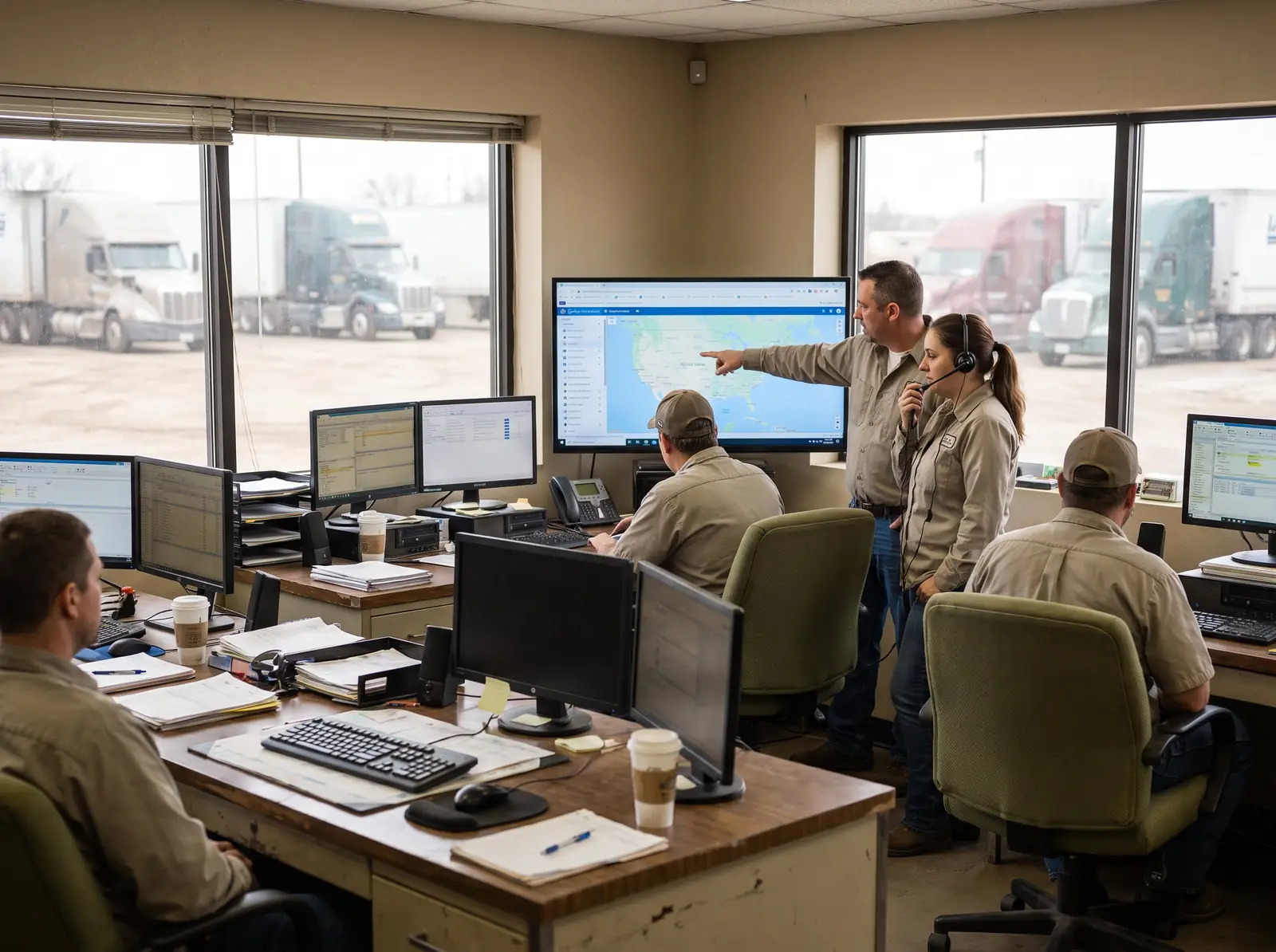
Where it really hurts
The threat does not stop at the computer. It stops the route, exposes the load and puts your word on the line, all at once.
An incident at a transportation operation never stays on the server. It travels down to the asphalt, and it charges its price on three fronts at the same time.
What stops on the road
The operation freezes at the worst moment: the board does not show the load, the branch cannot reach headquarters, dispatch cannot send anything out. Every hour without systems means a late delivery, a contract penalty and a truck sitting idle, burning money.
What keeps you up at night
The fear is not only the attack. It is the whole operation depending on a single set of credentials no one else knows: that one person only has to be out, unwell or unwilling, and the road stops with no one sure where to begin.
What should not exist
A company the market hired on the certainty that the load arrives should not live with the feeling that, on any given night, a system could go down and no one would pick up. Seriousness and improvisation do not ride on the same truck.
The question that stays
Your operation depends on a single technician who knows the whole system. The day they leave, or decide to hold you hostage, who keeps the operation running?
It is not a question about technology. It is a question about how much of your business is locked inside one person’s knowledge, and it deserves an answer you can verify, not one you hope is true.
An X-ray of a transportation operation
Where your operation travels, and where an attack tries to cut the road
At a transportation operation, what moves is not only cargo: it is the tracking the client follows, the integration that issues the freight and the access that commands all of it. We map the four points your operation passes through, because those are exactly the ones an attack looks for.
Real-time tracking
The client and dispatch follow every load on screen, minute by minute.
If it fails: If tracking goes down overnight, the load drops off the radar and no one can say where it is.
The client integration
Your system talks straight to the shipper: it issues, confirms and bills the freight.
If it fails: An integration that goes dark stalls both sides, and the demanding client is already calling a competitor before you call back.
The operation’s data
Routes, cargo values, contracts and driver records live inside your systems.
If it fails: One breach is enough to expose the route and the value of the load, exactly what an organized crew needs to act.
The access that commands it all
Whoever enters transportation systems has to be exactly who they claim, with only the access the role requires.
If it fails: A stolen password or an access never revoked becomes the door the attack, or the fraud, walks through without knocking.
Zamak covers the four points as a single system, not as a patchwork of fixes. That is how the operation keeps moving, and only those with permission command the road.
What’s at stake
What is at risk when the load you move becomes the target, on the road and on the network
The estimated loss to cargo theft in 2025, a 60% jump in a single year, as more organized crews target fewer, higher-value loads. Source: Verisk CargoNet, 2025.
Ransomware is present in 88% of breaches at smaller companies, against 39% at large ones. The attack does not choose by the size of the operation, it chooses by a lowered guard. Source: Verizon DBIR 2025.
In about 22% of breaches, the way in was a credential: a stolen or weak password, or an access that was never revoked. It is the door most often opened. Source: Verizon DBIR 2025.
The number that breaks the most dangerous myth in the sector: that an attack is a big-carrier problem. Size is no longer a shield. Anyone moving valuable cargo and holding the data of those who trust them is a target, from the regional carrier to the large operation, and what decides the outcome is not size, it is whether you are prepared.
A day at a transportation operation
The day runs at the pace of the road, right up to the point where technology decides to stop
The routine of a transportation operation is a race against a clock that does not forgive delay. See where a single incident cuts in and jams everything, and where Zamak changes the ending.
The first routes head out. Tracking up, dispatch issuing, the client already following the load on screen.
The operation at full speed. Every minute without systems is a late delivery, a driver held up and a client on the line asking questions.
The delivery windows close. Confirmations, manifests and freight invoices have to go out on time.
A click, an improper access, a ransomware attack. The operation stops at the worst moment, and the one person who understands the system does not answer the phone.
With Zamak, the story ends differently. The threat is detected and contained before it spreads, the operation stays up, the load stays tracked and the day closes the way it began: every delivery on course, without depending on one person to save the night.
The turning point
The problem was never you. It was an IT model that only shows up once the road has already stopped.
Most transportation operations live with an IT setup that fights fires: it shows up once the system is already down, once the data has already leaked, once the client has already called about the load. Zamak reverses the order. We are the enterprise backstop that works ahead, alongside whoever already looks after your technology, so the fire never starts on the night no one is on call. There is a method to it, and it fits in three steps.
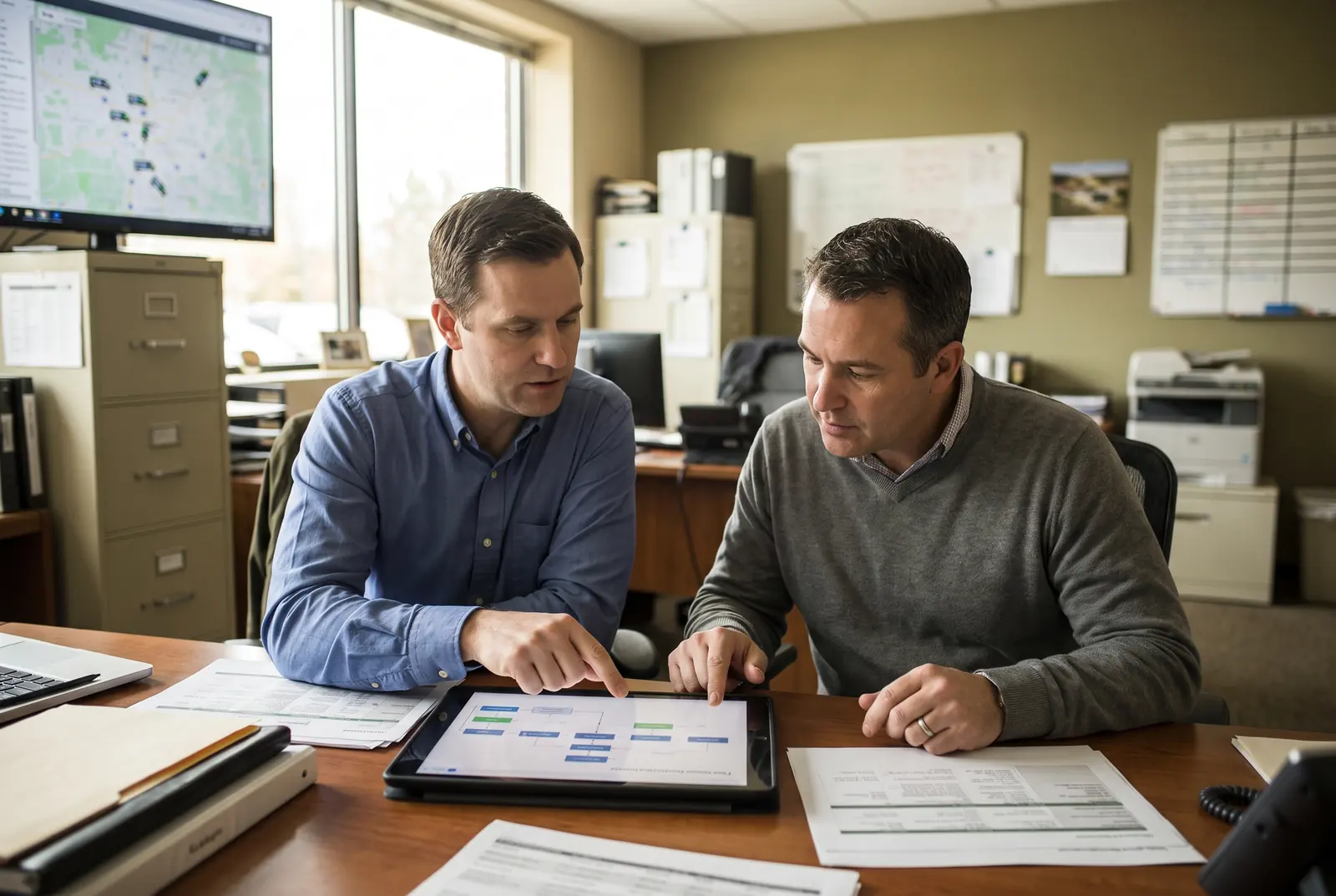
The Road Continuity Plan
See the risk
In an initial conversation, we map where your operation can stop and where access is concentrated in a single person. You finish knowing exactly where the road could close.
Harden the operation
We keep your technology running without downtime, protected against attacks, with access documented, distributed and reinforced by multi-factor authentication, and recovery tested, monitored day and night by a dedicated operations center.
Run with confidence
Your operation starts moving with no sudden shocks, tracking up, the client served and the knowledge out of one person’s head. This is the destination, not one more task on your list.
From the first conversation to the ongoing follow-up, you have a partner at your side who understands the daily life of moving cargo, not only that of running a server.
For every role in your operation
The same protection, speaking to each person who keeps the operation on the road
The scene at the top of this page is made of real people, and each one carries a different concern. Zamak answers all of them without taking the lead role from anyone.
Compliance as a letter of trust
Turn the shipper’s and the insurer’s audit into an argument in your favor
In transportation, proving your security is in order stopped being paperwork and became a condition to win and keep a contract. The large shipper audits before entrusting the cargo, and the insurer weighs your posture into the premium. That is why Zamak offers a readiness service: it maps your gaps against the standards the market recognizes, keeps your evidence continuously collected and prepares your operation for the next audit.
ISO 27001
The international standard for information security management. It is the credential the large shipper and the insurer ask for before entrusting the cargo and closing the freight contract.
NIST CSF
One of the most widely adopted cyber risk management frameworks in the world. It gives your operation a common language to measure, prove and improve security, route after route.
CIS Controls
A prioritized set of practical controls, from the most essential to the most advanced. It delivers real protection even for the operation that runs with a lean IT team.
GDPR and LGPD
The personal data protection laws of the markets you operate in, the European and the Brazilian among them. We treat the data of the driver, the client and the cargo with the rigor each market’s law demands.
The compliance stays yours; with Zamak, the work of keeping it in order and the evidence ready to present stop keeping you up at night. It begins with a no-cost assessment against the standard that weighs most on your next contract, and continues as an ongoing engagement.
What changes in practice
A transportation operation that runs with the calm of being in control
When the technology foundation stops being a silent risk and becomes an asset, the difference shows up in the daily life of whoever commands the operation.
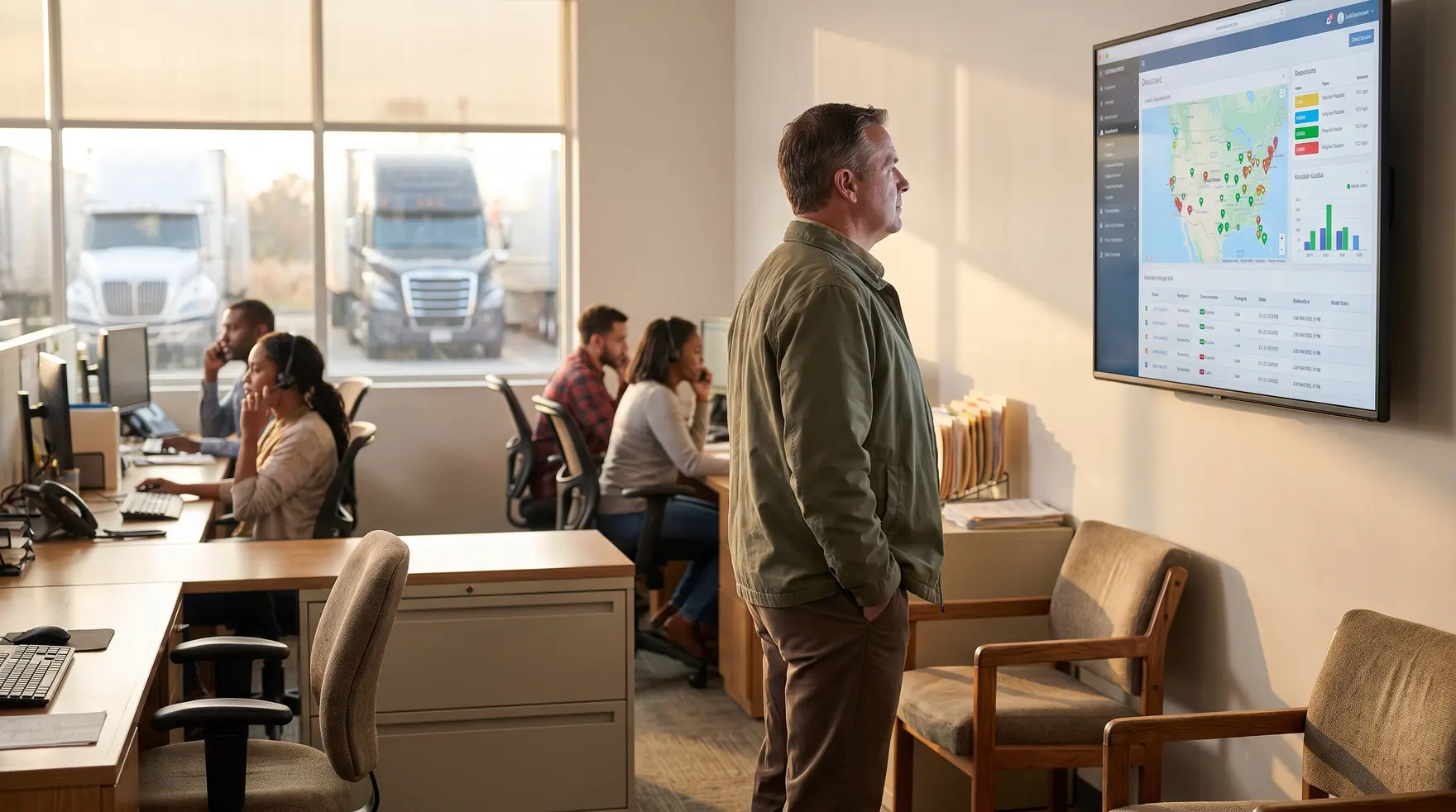
The operation does not stop
Systems up when the road demands it, with tested recovery for the night something goes off script.
The tracking and the data stay protected
The route, the value of the load and the data of those who trust you stay guarded, isolated and encrypted, away from anyone without permission.
The knowledge stops being held hostage
Access becomes documented and distributed, and the operation stops depending on a single person in order not to stop.
Trust becomes contract
On a solid foundation, your operation wins, keeps and renews freight on the reputation of a business that always delivers.
Proven trust
Transportation operations that entrusted their technology to Zamak


Real Auto Ônibus and TrelsaLog are among the transportation and logistics operations that entrusted their technology to Zamak Technologies. In a sector where your word is worth as much as the load, looking after the technology of those who move what the market is waiting for is the proof that matters most to us.
Zamak’s credentials
We do not ask you to take our word for it. We show you the credentials.
Zamak Technologies operates on a technology and security foundation that carries the same certifications the market demands of anyone looking after an operation that cannot stop.
Microsoft Solutions Partner
A partnership that attests to Zamak’s competence in Microsoft 365 environments, where your back-office and operations team works every day.
Addee Elite Group
Top of the partner program of N-able’s exclusive distributor in Brazil, a reference in data resilience and recovery.

Great Place to Work
Certification that Zamak is built by people who stick around, which translates into continuity for those who cannot stop.

BACCF member
Brazil-Florida Chamber of Commerce, with an operation ready to serve your business across the Americas.
We operate with tools certified in SOC 2 Type II and ISO 27001, the same certifications the large shipper looks for when auditing whoever is going to carry its cargo.
Before you ask
Cybersecurity and managed IT for the transportation sector: TMS and tracking up, access protected
Cybersecurity and managed IT for the transportation sector is the service that keeps the TMS and real-time tracking running, protects access with strong authentication, runs isolated backup with tested recovery and keeps evidence ready for shipper and insurance audits. Zamak Technologies delivers that coverage as a single partner, from regional carriers to large transportation operations, across the Americas.
Where to go next
Go deeper on what weighs most for your transportation operation
The conversation that keeps the road open
Let’s keep your operation moving, whatever happens
An initial conversation, no strings attached, to map where your operation is exposed and what to do about it. From those who look after technology to those who move what the market is waiting for.
Book the first conversation